
Questions
Frequently Asked Questions
If your question is not answered here, please contact us. We respond within two to three days.
Requesting an Instrument
Is there a cost?
No. Instruments and delivery are provided at no cost to recipients, and the project does not handle money.
Pianos and other large instruments require insured professional movers. We seek a mover who donates the job or a sponsor who pays the mover directly. If a move cannot be arranged, we will let you know.
Do we have to prove financial need?
No. There is no application, income check, or paperwork.
How long does it take?
Timing varies. If a suitable instrument is already available, it may take a few days. Otherwise, finding a match may take several weeks or longer. We will keep you updated.
What if the instrument needs work?
We service instruments before delivery when possible and tell you about any remaining issues.
What if we move, or the student stops playing?
Let us know, and we will pick up the instrument and offer it to another student. There is nothing to pay back.
Donating an Instrument
Will you accept an instrument that needs repair?
Instruments with sticking keys or worn pads may be repairable. We generally cannot accept instruments with extensive water damage, cracked soundboards, or damage that is uneconomical to repair. We will tell you before accepting an instrument.
I have a piano. Do I have to move it?
No. Pianos are moved only by insured professional movers, and you are not asked to pay. Students never move pianos.
We seek a mover who donates the job or a sponsor who pays the mover directly. The money never passes through the project. If a move cannot be arranged, we will let you know.
Can I get a tax receipt?
No. The Noteworthy Project is not a registered charity, so donations are not tax-deductible, and we cannot issue receipts.
Will you tell me who receives it?
We will let you know when your instrument has been placed, but we do not share recipients’ private details.
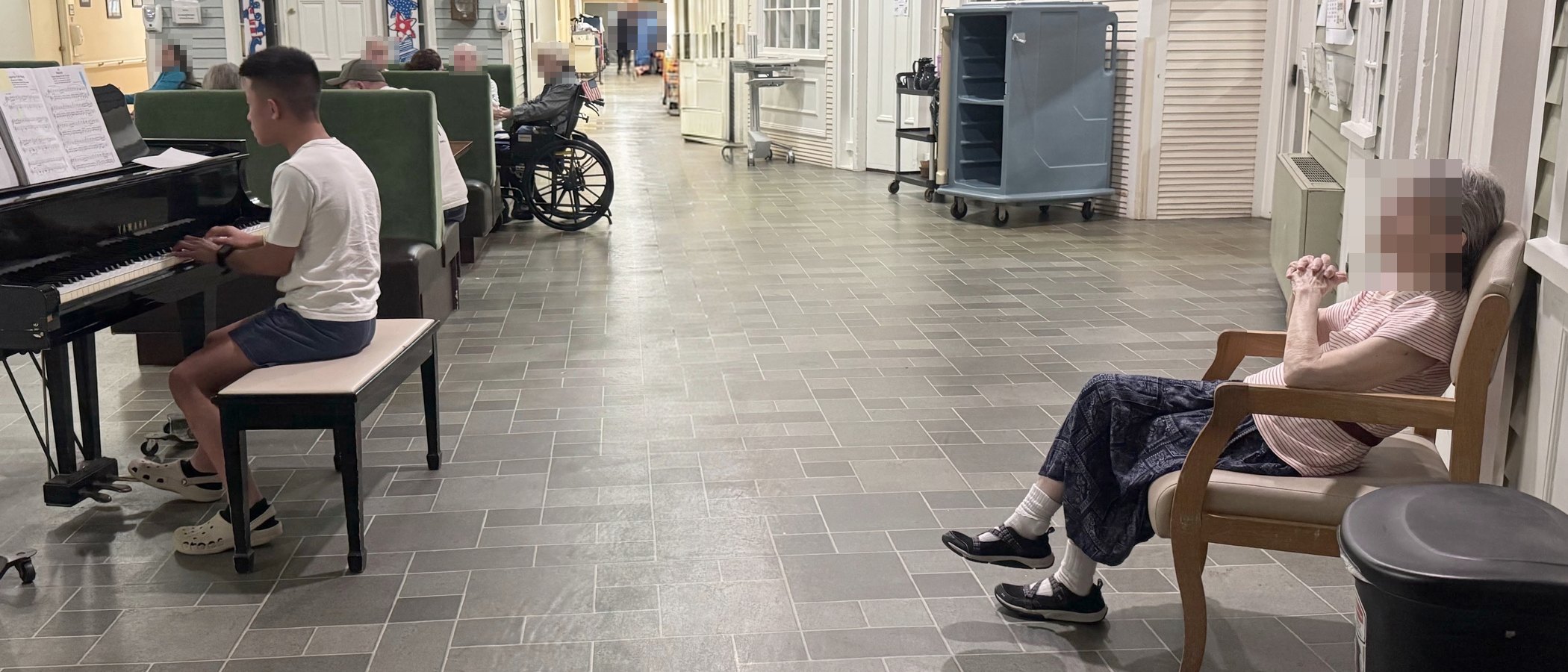
Mini Maestros Performances
What experience does a student need?
Students should have playing experience and prepare about 20 minutes of music they can perform confidently. No audition is required.
What does a host community need to provide?
A room where residents gather and a staff member to greet the students. If you have a piano, students will use it; otherwise, they bring a keyboard. There is no cost.
How long is a visit?
Each visit lasts about an hour at the host community, including about 45 minutes of music, usually on a weekend afternoon. Afterward, students stay to talk with residents.
Do the same students return?
When possible. We ask students to participate in three visits per school term, and we try to schedule the same students at the same community.
Are students supervised?
Yes. A parent or guardian chaperones every visit. Students are never at a host community without an adult who came with them.
Do students need a parent’s permission?
Yes. Participants under 18 need written consent from a parent or guardian before a visit is scheduled. Permission to appear in photographs is requested separately.
About the Project
What do students gain from volunteering?
Students earn service hours, approved by a project leader, and gain experience performing, organizing, and working with their community.
Who runs the project?
Students lead the project, with adult support for transportation, supervision, and agreements with host organizations.
Where do you work?
New Hampshire and Massachusetts. If you are just outside this area, please contact us.
Can I donate money?
No. We accept instruments and volunteer time only. Sponsors can pay a seller or service provider directly for a specific expense. See Sponsor an Instrument or a Move.
How do you find instruments?
Students check local listings, estate sales, and community boards, and contact owners directly. Many instruments come from people who offer one they no longer use.
Still Have Questions?
Contact us, and we will point you in the right direction.

Play it forward.
Instruments where they’re needed.
Music where it’s missed.